
01
Analyze the Source Catalog
Review the structure of the supplier file, identify available fields, detect missing information and determine which existing signals can support product recovery.
AIKIVORS turns incomplete supplier catalogs into structured, usable product data through a controlled workflow: analyze the source file, search relevant sources, match the right references, recover missing information, validate the result and deliver the final catalog in an operational format.
Each stage has a specific role. The workflow is designed to preserve useful source information, strengthen product matching and avoid treating uncertain data as if it were verified.
Review the structure of the supplier file, identify available fields, detect missing information and determine which existing signals can support product recovery.
Use the available product identifiers, names and references to search the most relevant sources for missing data, images and corroborating product information.
Compare identifiers and product signals to strengthen the correspondence between the supplier row and the product record found externally.
Enrich the catalog with the agreed fields, which may include official designations, identifiers, brands, categories, useful attributes and relevant product images.
Review consistency, image relevance, identifier correspondence and uncertain matches so questionable records remain visible instead of being silently forced into the final file.
Return the enriched product data in the agreed structure, with organized image assets or links and the fields required for the next operational system.
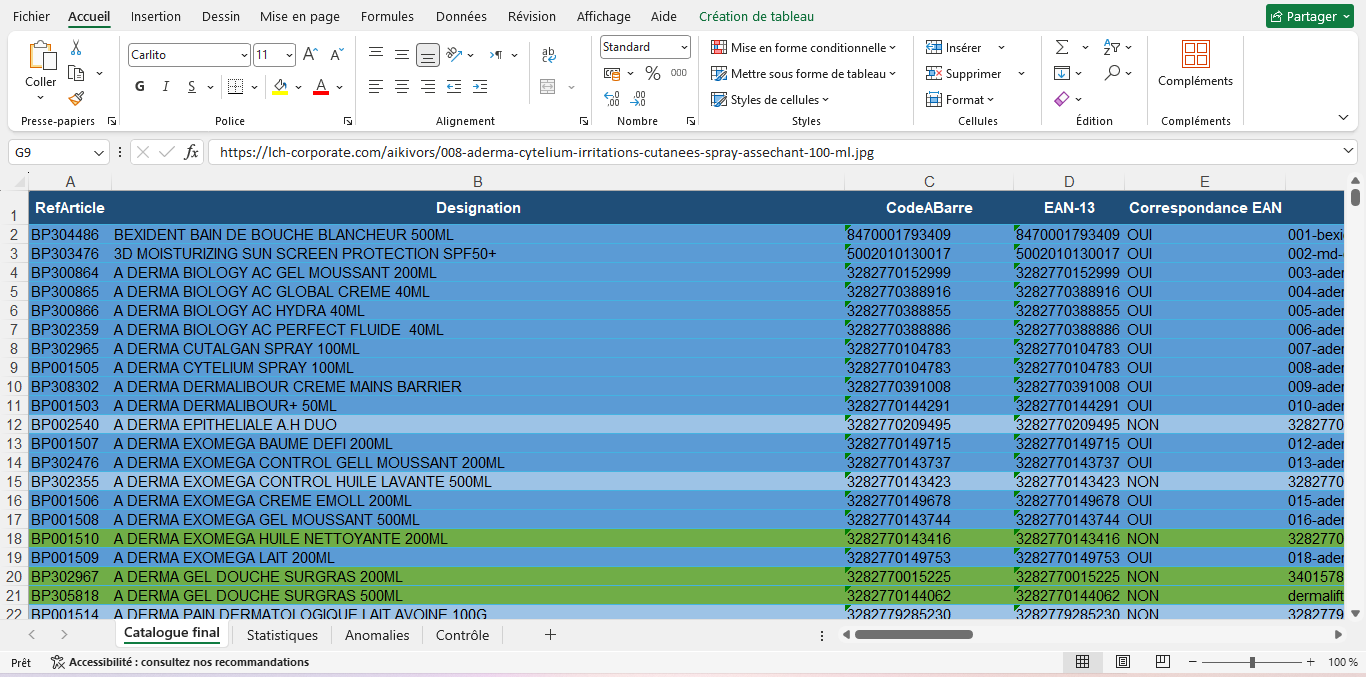
A useful enrichment process begins by understanding the source catalog itself. Existing SKU references, barcodes, designations and supplier fields are not discarded: they are used to guide the search and maintain traceability throughout the project.
Product enrichment only creates value when the result is usable. Quality gates focus on the elements most likely to create downstream errors in product pages, databases and imports.
Compare available product identifiers and flag unclear correspondence instead of treating it as confirmed.
Review whether the recovered visual actually represents the intended product rather than a logo, ad or unrelated asset.
Keep output formats consistent so the enriched file is easier to import, compare and maintain.
Keep difficult or uncertain references visible for further review rather than hiding them inside an apparently complete file.
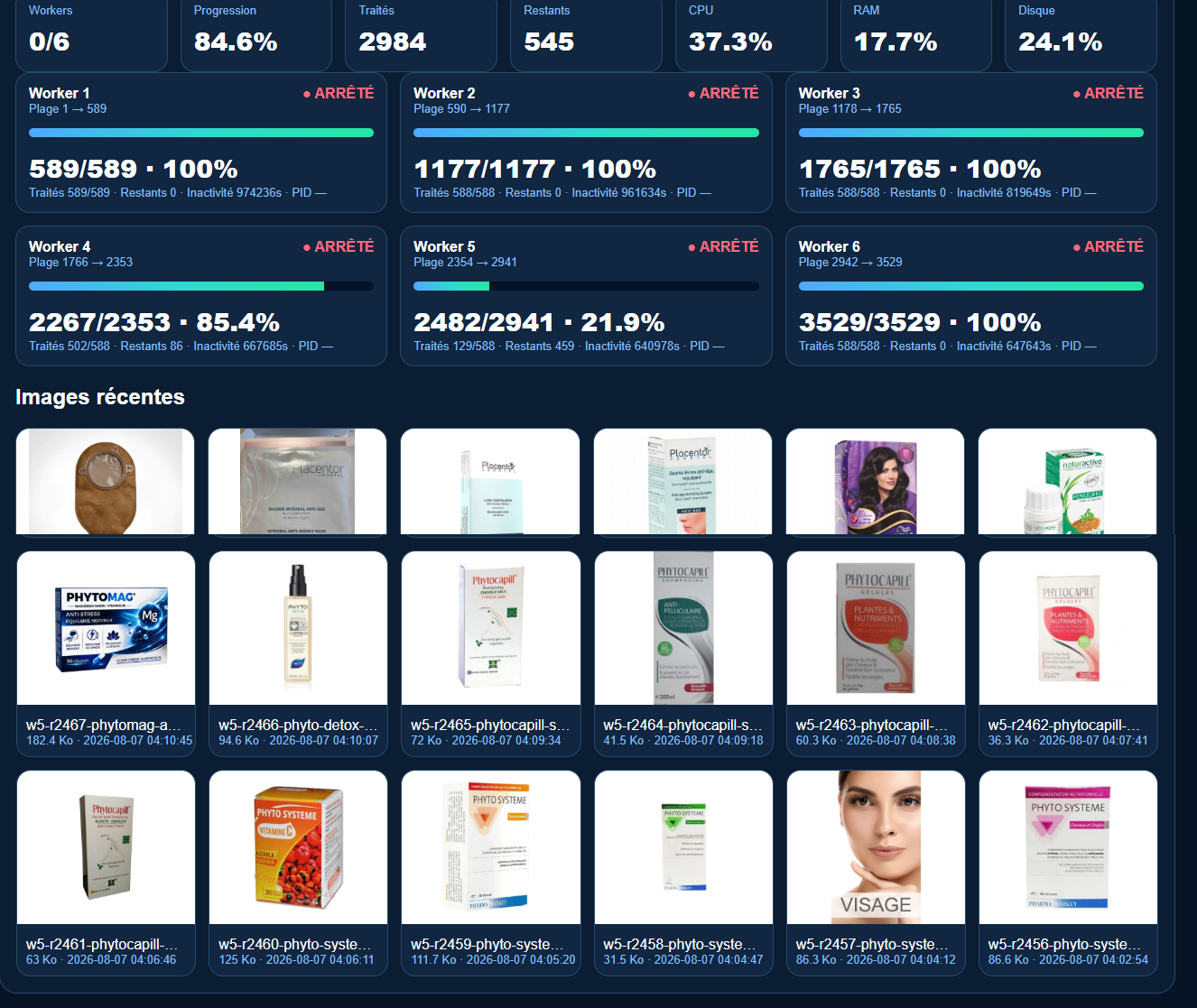
Larger catalogs can be split into controlled ranges and processed in parallel while keeping the same recovery rules, output structure and quality checkpoints. This makes the method suitable for both one-off recovery projects and recurring supplier data operations.
The exact fields depend on your project, but the overall objective remains the same: turn fragmented source data into a structured, documented and operational catalog.
Existing supplier or internal catalog files with partial product information.
A cleaner, enriched structure aligned to the agreed business and system requirements.
A project can begin with an existing supplier or internal catalog, typically in XLSX or CSV format. Available SKU references, product names, barcodes and other fields are used as the starting signals for research and matching.
The workflow is consistent, but the strongest matching signals vary by product. Some references can be validated directly from reliable identifiers, while others require additional comparison between designations, brands, images and multiple sources.
Uncertain references can be kept visible for additional review. The goal is not to force a result simply to make the file appear complete, but to preserve the distinction between strong matches and unresolved records.
Yes. Larger catalogs can be split into controlled processing ranges and handled in parallel while keeping the same output structure, recovery rules and quality checkpoints.
The free 25-SKU audit provides a small representative sample to evaluate recoverability, matching quality and the most useful output structure before moving to a larger volume.
Send a representative sample and see how much product information can be recovered, matched and structured before deciding how to approach the rest of your catalog.