
01
Larger catalogs
Scale the same structured logic from a representative sample to thousands of product references without losing row-level traceability.
AIKIVORS is designed around a simple idea: product data recovery should become more structured, repeatable and controllable as catalogs, markets and supplier volumes grow.

Catalog enrichment becomes more valuable when it is treated as an operating capability rather than an isolated cleanup task. The long-term objective is to create repeatable ways to detect gaps, recover missing information, validate product signals and deliver usable data.
Scale the same structured logic from a representative sample to thousands of product references without losing row-level traceability.
Support expansion when catalog teams need more complete product data to serve new e-commerce channels, marketplaces or geographic markets.
Move from one-off enrichment toward repeatable processing as supplier files and new references arrive over time.
Keep unresolved rows, validation states and processing outcomes visible so teams know what is complete and what still needs attention.
Combine structured execution with supervision so scale does not come at the expense of relevance.
Turn catalog recovery methods into a repeatable foundation that can be reused across suppliers, product ranges and future projects.

Large catalogs create edge cases: ambiguous references, unsuitable images, weak source data and conflicting product signals. AIKIVORS keeps human supervision inside the operating model so difficult rows can be treated differently from confident matches.
Useful scale means preserving consistency while product volume increases. It means keeping source data intact, maintaining clear output rules and making unresolved work visible rather than burying it inside an inflated completion percentage.
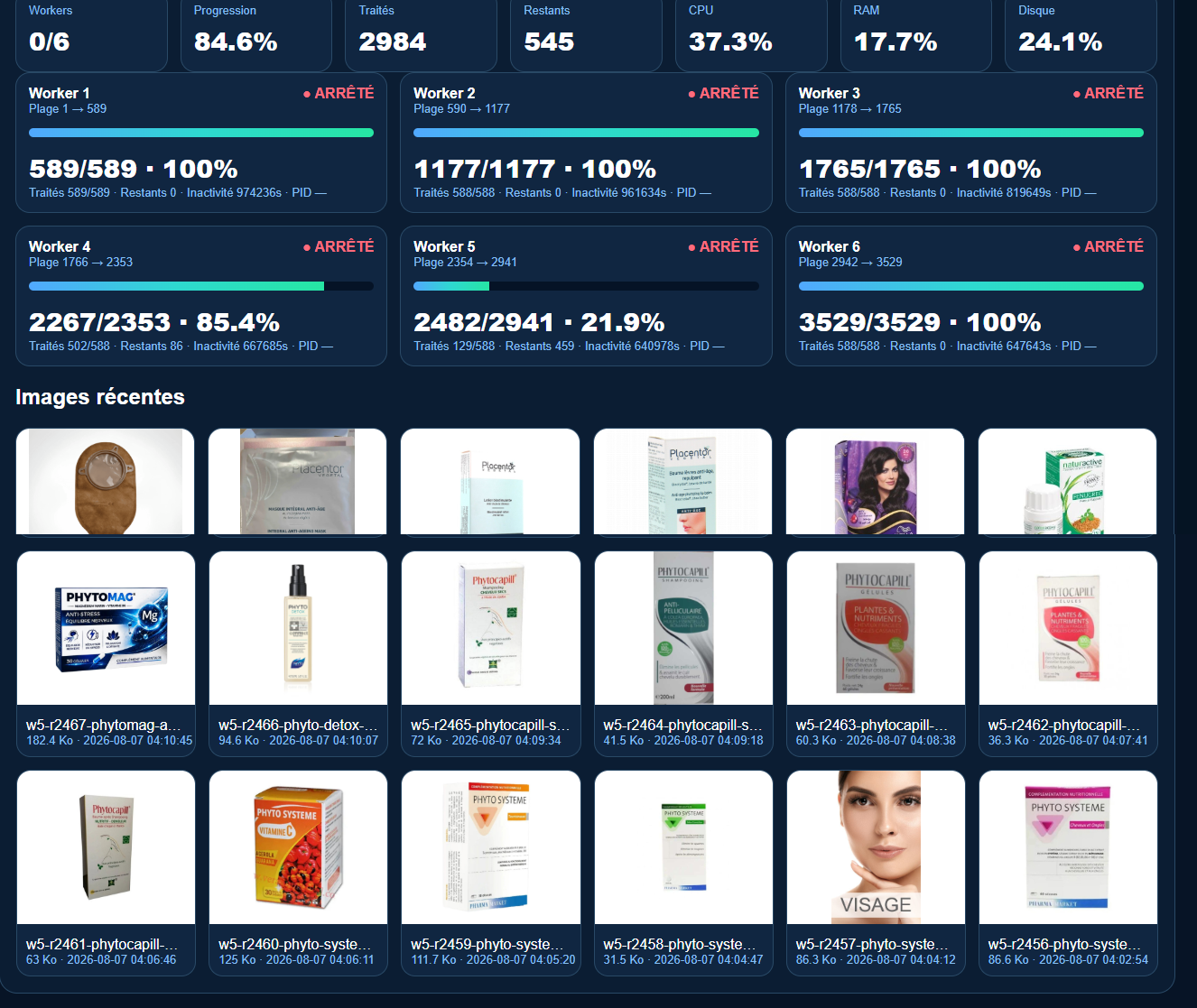
The direction is a modular operating model that can support larger catalogs, new product categories and recurring supplier data while retaining traceability, quality controls and clear delivery formats.
Build repeatable logic around common supplier data situations instead of treating every catalog as a completely new project.
Use multiple information sources while keeping matching rules, provenance and quality expectations understandable.
Make it easier to distinguish successful recovery, ambiguous matches, missing content and records that need another pass.
Support the transition from historical backlog recovery to recurring catalog maintenance when business needs justify it.
A 25-SKU audit can reveal the recovery potential of your catalog before you decide how far to scale the workflow.